Manuela Hoelterhoff
An appreciation originally published in The New York Times

Manuela Hoelterhoff, Pulitzer-Winning Arts Critic, Dies at 77
She won the top journalism honor for criticism while with The Wall Street Journal. She later wrote a wry, perceptive book about the backstage world of opera.
By Tim Page
May 7, 2026
Manuela Hoelterhoff, who won a Pulitzer Prize at The Wall Street Journal in 1983 for her wide-ranging arts criticism and later wrote a trenchant book about the backstage world of opera, died on Wednesday in Manhattan. She was 77.
The artist Marilyn Perry, a close friend, said the death, at a hospital, was from esophageal cancer.
Ms. Hoelterhoff, who was born into the ruins of post-World War II Germany and grew up in the New York suburbs, spent more than 20 years with The Journal. She served variously as a critic, arts editor, book editor and member of the editorial board.
She won the criticism Pulitzer for her writing on television, books, opera, art and architecture. In one piece, she described David Attenborough’s nature program “Life on Earth” as a welcome respite from gallery showings.
“On Tuesday evenings lately,” she wrote, “I put aside all thoughts of new art hero Julian Schnabel in favor of his virtual namesake, the duck-billed platypus, and the little wave of German Neo-Expressionists gives way to the elemental forces that separated continents, curdled the oceans and caused whole mountain ranges to pop off into the skies like pressure cookers.”
From 2004 to 2014, she served as the executive editor of Muse, an arts and culture section she founded at Bloomberg News. During that period, she noted on her website, she supervised “20,000 stories and reviews about architecture, books, theater, music, film, dogs.”
Opera was her primary passion, for what she called its “wonderfully rich” combination of history, theater, drama, design and dance. In her 1998 book, “Cinderella & Company: Backstage at the Opera with Cecilia Bartoli,” she detailed her two years following that superstar Italian mezzo-soprano around the world.
Recounting exhausting rehearsals and titanic egos, she produced what the New York Times classical music critic Anthony Tommasini praised in a review as “the most perceptive and hilariously honest book on the making and marketing of opera to come along in some time.”
While tartly dismissing overstuffed stagings and naming some of the more oppressive personalities in the industry, Ms. Hoelterhoff also expressed a tender wonderment for the performances themselves.
Of the soprano June Anderson, she wrote, “Of all the artists I have ever met, she made me most aware of how hard it can be for shy singers to come to terms with a mysterious gift that requires them to face several thousand strangers who do not necessarily wish them well.”
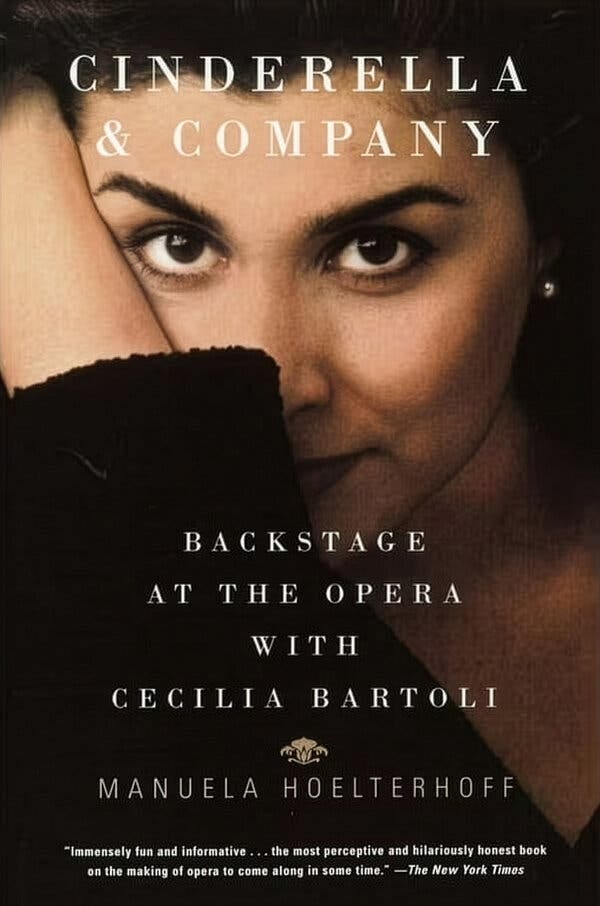
Anthony Tommasini, the New York Times classical music critic, praised Ms. Hoelterhoff’s 1998 book as “the most perceptive and hilariously honest book on the making and marketing of opera to come along in some time.”Credit...Knopf
Manuela Vali Hoelterhoff was born in Hamburg, Germany, on April 6, 1949. She was the only child of Olga (Goertz) Hoelterhoff, who was Latvian, and Heinz Hoelterhoff, who was one of only about 5,000 German soldiers to survive the Battle of Stalingrad, in which hundreds of thousands were killed. Ms. Hoelterhoff later said her earliest memories were of the wreckage of war.
The family emigrated to the United States in 1957 and settled near Nyack, N.Y. Her father was an engineer, and her mother worked at the Tolstoy Foundation, a refugee center founded in 1939 by one of Leo Tolstoy’s daughters and her friend.
Ms. Hoelterhoff’s first experience with opera came, courtesy of her mother, during the last year of the old Metropolitan Opera House, which closed in 1966, when the company moved to Lincoln Center, and was demolished the next year.
In 1971, she received a bachelor’s degree from Hofstra University in Hempstead, N.Y., followed two years later by a master’s in art history from New York University’s Institute of Fine Arts. She published a few pieces in National Review, then in 1975 decided to approach The Journal with an article about a performance of Strauss’s opera “Der Rosenkavalier.”
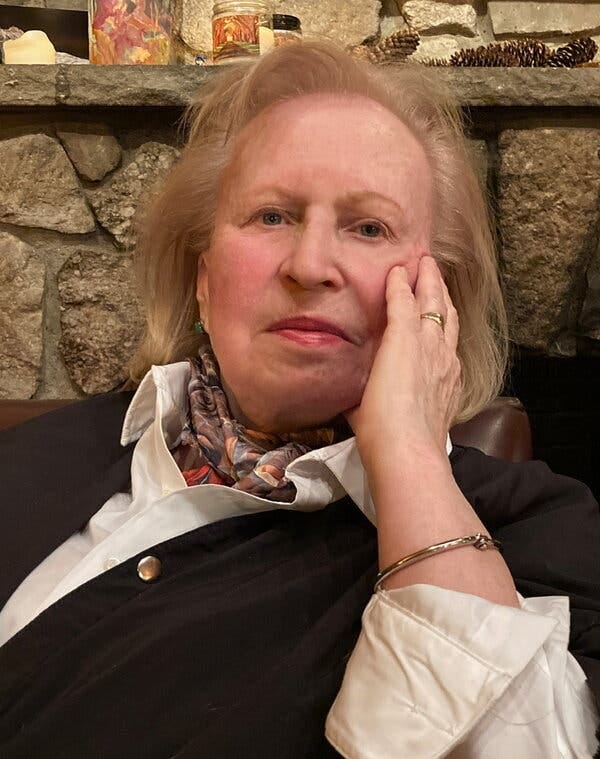
In addition to journalism, Ms. Hoelterhoff wrote the libretto for “Modern Painters,” a 1995 opera about the 19th-century critic John Ruskin with music by David Lang.Credit...Marilyn Perry
It was Sunday and the offices were empty, so she gave the envelope to a guard. “I was smart enough to know that all the other papers had a regular writing staff to write their reviews, but naïve enough to believe that this approach at The Journal might work,” Ms. Hoelterhoff said in a 1985 interview with the reference guide Contemporary Authors.
Ms. Hoelterhoff wrote the libretto for “Modern Painters,” an opera with music by David Lang about John Ruskin, the 19th-century English critic of art, architecture and society; it premiered at the Santa Fe Opera in 1995. She was also a founding editor of Condé Nast Traveler in 1987 and of SmartMoney magazine in 1992, all while retaining an association with The Journal.
From 1990 to 2010, she was in a romantic partnership with the director and opera impresario Francesca Zambello. She leaves no immediate survivors.
Ms. Hoelterhoff, who had homes in Manhattan and Gardiner, N.Y., near Poughkeepsie, was known for hosting glittering parties, which attendees described as salons. The author and Columbia University psychiatry professor Robert Klitzman, a friend, credited her with bringing an “Old World” sensibility to New York.
“She knew everybody,” he said. “Artists, musicians, publishers — sometimes she would open her home for the publication of a new book or a sculptor she had just discovered and wanted to share.”
Thanks for this, Tim. Is there a collection of her criticism anywhere?
Fascinating woman. I hadn’t known about her, but surely had read her.